
Roofing Permits in Clay County: Requirements, Approvals, Inspections & How to Avoid Permit Delays
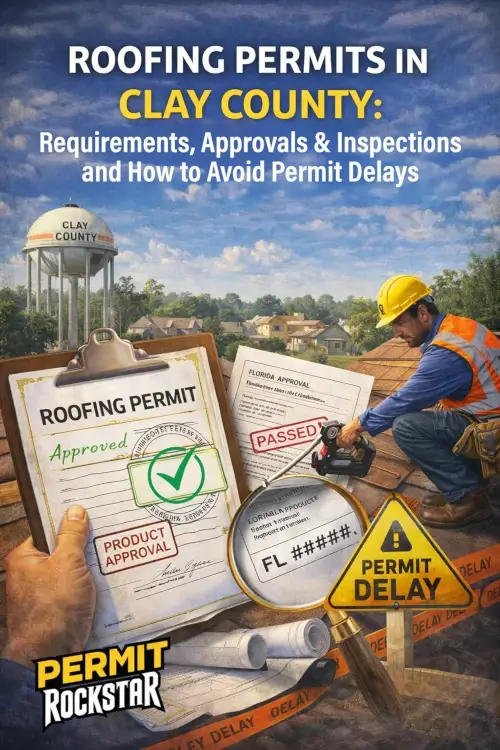
Roofing projects are among the most common construction activities across Northeast Florida, and Clay County is no exception. Whether you’re replacing storm-damaged shingles, installing a new metal roofing system, or completing a full structural reroof on a residential or commercial property, obtaining the proper roofing permits is a critical first step.
Contractors working in Clay County must understand how building permits, Florida product approvals, inspections, and Notice of Commencement filings all fit together within the broader Florida permitting process.
For many roofing contractors, however, the permitting stage can become the biggest bottleneck on a project timeline. Between submitting permit applications, verifying product approvals, coordinating inspections, and ensuring compliance with Florida Building Code requirements, even small paperwork mistakes can slow approvals significantly.
Because the process involves multiple steps and strict documentation requirements, many contractors rely on permitting specialists to help prepare applications and verify documentation before submission.
Permit Rockstar works with roofing contractors across Northeast Florida to prepare Clay County permit applications, verify product approvals, coordinate private plan reviews, and manage Notice of Commencement filings so projects can move through the permitting process faster.
This guide explains everything roofing contractors should know about Clay County roofing permits in 2026, including:
Roofing permit requirements
Florida product approval rules
Clay County Notice of Commencement requirements
Roofing inspection stages
Private plan reviews
Strategies for speeding up permit approvals
Why Roofing Permits Are Required in Clay County
Clay County requires permits for most roofing work to ensure installations meet the Florida Building Code (FBC) and local structural safety standards.
Roofing systems are a critical part of a building’s structural envelope. Improper installation can lead to:
Water intrusion
Structural damage
Wind uplift failure
Hurricane-related roof loss
Because Florida experiences some of the highest wind loads in the country, roofing systems must meet strict engineering and installation standards.
When contractors apply for Clay County building permits, the building department reviews the permit application to confirm that roofing materials, fastening schedules, and installation methods meet code requirements.
Typical documentation required for Clay County roofing permits includes:
Roofing material product approvals
Manufacturer installation instructions
Project scope descriptions
Contractor licensing information
Property ownership verification
Structural details (when applicable)
If these materials are incomplete or missing, permit reviewers cannot verify code compliance, which results in permit revisions and delays.
Permit Rockstar helps contractors avoid these delays by reviewing permit documentation, verifying product approvals, and preparing complete Clay County roofing permit applications before submission.
Types of Roofing Projects That Require Clay County Permits
Most roofing work in Clay County requires a permit, even when the scope of work seems relatively straightforward. Contractors should expect to obtain permits for the following project types.
- Roof Replacements
Full reroof projects require permits because they involve removing an existing roofing system and installing new materials. Clay County reviewers verify that the replacement system meets wind resistance requirements and that underlayment, fastening, and flashing methods comply with the Florida Building Code.
- Structural Roof Modifications
If a project involves structural changes such as:
- Replacing roof decking
- Altering roof pitch
- Modifying trusses
- Reinforcing framing
- Additional engineering documentation may be required during the permit review process.
- Roof Recover Projects
In some cases, contractors install a new roofing layer over an existing system. Even when structural components remain unchanged, Clay County still typically requires permits to verify structural capacity and code compliance.
- Commercial Roofing Systems
Commercial roofing systems such as:
- TPO
- Modified bitumen
- Built-up roofing
- Metal panel systems
Because each roofing system has unique documentation requirements, contractors benefit from reviewing permit packages carefully before submission — especially when using Clay County private plan reviews to reduce revision cycles.
Clay County Notice of Commencement (NOC) Requirements for Roofing Projects
One document roofing contractors cannot overlook is the Clay County Notice of Commencement (NOC). Under Florida law, most construction projects exceeding $2,500 require a Notice of Commencement to be recorded before work begins.
The NOC serves several important purposes.
It identifies the property owner, contractor, and lender involved in the project.
It establishes lien timelines under Florida construction law.
It notifies subcontractors and suppliers about the project’s legal structure.
For roofing contractors, ensuring the NOC is properly filed protects payment rights and prevents administrative delays later in the project.
Typically, the Clay County Notice of Commencement must be:
Recorded with the Clay County Clerk of Court
Posted at the job site
Filed before the first inspection occurs
Failing to properly record an NOC can delay inspections and complicate payment documentation for subcontractors and suppliers. Because NOCs must be correctly prepared, notarized, and recorded before inspections begin, many contractors choose to outsource this administrative step.
Permit Rockstar can prepare, notarize (when applicable), and record Clay County Notices of Commencement while ensuring the recorded document is included with the permit file. This helps contractors avoid inspection delays and keeps lien documentation properly organized from the start of the project.
Florida Product Approvals: A Major Cause of Roofing Permit Delays
One of the most common reasons roofing permit applications are delayed is missing or incorrect Florida product approval documentation. Florida requires roofing materials to undergo testing and certification for wind resistance and weather performance.
For Clay County roofing permits, contractors must typically provide:
Florida Product Approval numbers
Miami-Dade Notice of Acceptance (NOA) documentation when applicable
Manufacturer installation specifications
Fastening schedules and wind-load requirements
These approvals confirm that roofing materials meet Florida’s strict performance standards.
For example:
Asphalt shingles must meet wind uplift ratings appropriate for Clay County’s wind zone.
Metal roofing panels must include approved fastening patterns and installation methods.
When product approvals are missing or improperly formatted, permit reviewers will request revisions.
Permit Rockstar reviews roofing permit packages before submission to confirm that Florida Product Approval numbers, installation instructions, and supporting documentation are properly included. Identifying these issues early helps contractors avoid permit revision cycles that can delay project start dates.
Understanding the Clay County Roofing Permit Process
The typical process for obtaining a roofing permit in Clay County involves several steps.
Step 1: Permit Application Submission
Contractors begin by submitting an application to the Clay County building department. The application includes:
Contractor license verification
Project details
Property information
Supporting documentation
Step 2: Plan Review
During plan review, building officials verify that the roofing system complies with the Florida Building Code.
Reviewers examine:
Product approvals
Installation details
Structural requirements
Permit documentation
Step 3: Permit Issuance
Once the review is completed and all documentation meets code requirements, the permit is issued.
Step 4: Inspection Scheduling
After the permit is issued, contractors schedule inspections at key stages of the roofing installation.
Step 5: Final Approval
After all inspections pass successfully, the permit is closed and the roofing project is officially approved.
Although this process appears straightforward, delays often occur when documentation errors require permit revisions. Clay County contractors who use private plan reviews frequently experience faster approvals because documentation issues are addressed before submission.
How Private Plan Reviews Help Roofing Contractors Move Faster
Private plan review services have become increasingly popular throughout Northeast Florida because they reduce permitting delays.
Instead of waiting for municipal reviewers to identify issues, contractors can submit permit packages for review before filing them with the county.
Permit Rockstar can complete a Clay County private plan review for roofing contractors within as little as 1 day.
During a Permit Rockstar private plan review, permit specialists evaluate:
Product approval accuracy
Code compliance
Documentation completeness
Installation specifications
NOC documentation
By correcting potential issues before submission, contractors can submit stronger permit packages that move through the Clay County building department much faster.
Common Mistakes Contractors Make with Clay County Roofing Permits
Even experienced roofing contractors sometimes encounter issues when applying for permits.
Common mistakes include:
Submitting incorrect product approvals
Missing Notice of Commencement filings
Incomplete permit applications
Incorrect contractor license information
Missing required inspections
Each of these issues can trigger permit revisions and delay project timelines.
How Permit Rockstar Helps Contractors Get Roofing Permits Faster
Roofing contractors and other builders throughout Northeast Florida often lose valuable time dealing with permit paperwork and approvals.
Permit Rockstar helps contractors:
Save time and money
Stay legally compliant
Increase productivity
Easily operate across multiple counties
By ensuring permit packages are complete before submission, contractors can reduce revision cycles and keep roofing projects moving forward. For companies handling multiple roofing permits each month, outsourcing these administrative steps allows crews to focus on installation work rather than paperwork.
Contact Permit Rockstar today to supercharge your permitting from paperwork to final inspection. Get a free demo by visiting: https://permitrockstar.com/schedule-a-demo/


